
Last updated: May 2026. This article is reviewed quarterly.
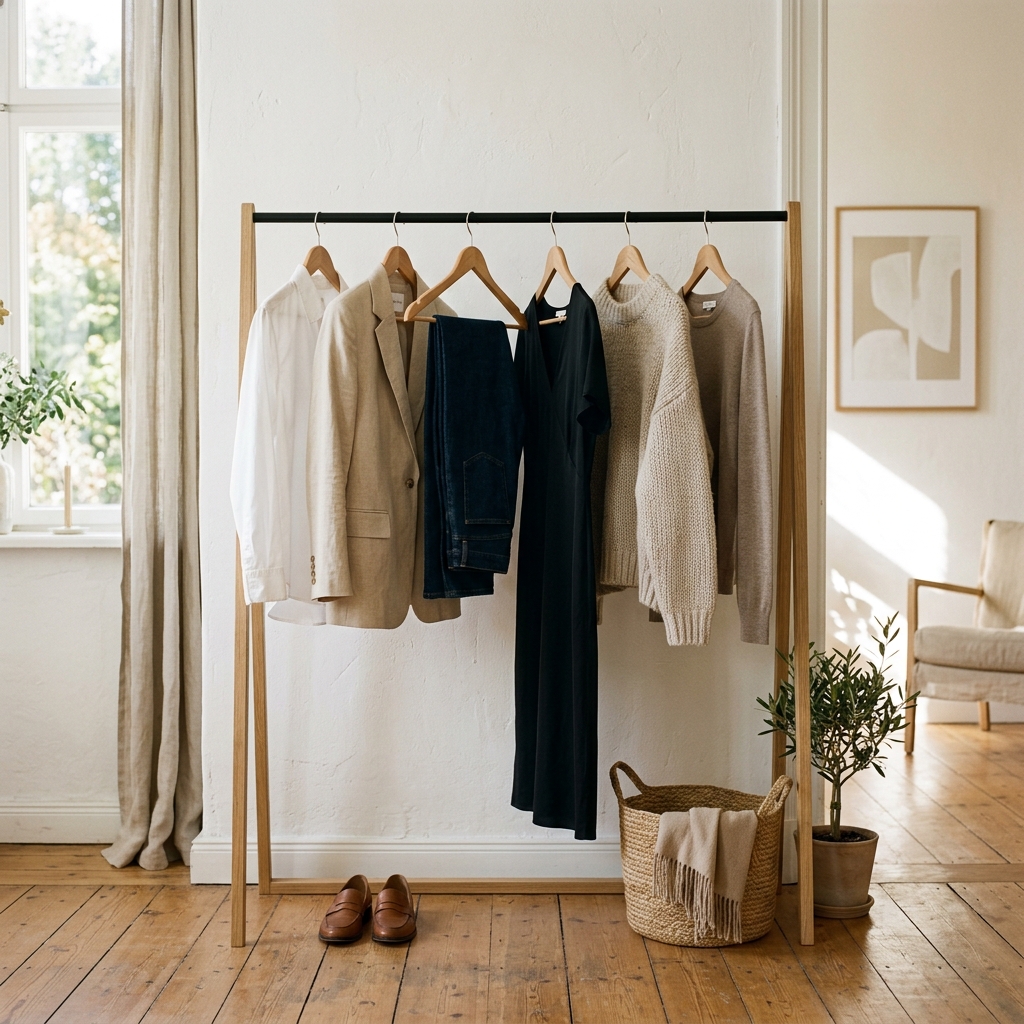
The average American buys 68 garments per year. Most of us wear about 20% of our wardrobe 80% of the time. The rest hangs in the closet, taking up space, and slowly losing relevance. A capsule wardrobe flips that ratio: fewer pieces, each one earning its place.
The concept isn’t new. Fashion editor Susie Faux coined the term in the 1970s, and Donna Karan popularized it with her “Seven Easy Pieces” collection in 1985. But capsule wardrobes have surged in popularity over the past five years, driven partly by sustainability awareness and partly by the sheer exhaustion of decision fatigue.
This guide covers how to build one from scratch, what to keep, what to let go, and how to avoid the most common beginner mistakes.
What a Capsule Wardrobe Actually Is (And Isn’t)
A capsule wardrobe is a small collection of interchangeable clothing items that cover all your daily needs. Most capsule wardrobes contain 25-40 pieces total, including tops, bottoms, dresses, outerwear, and shoes. Accessories, workout clothes, and special-occasion wear are typically excluded from the count.
What it’s not: a uniform. The goal isn’t to wear the same outfit every day. It’s to own only pieces that mix and match easily, so getting dressed takes less time while every outfit looks intentional.
Step 1: Audit What You Already Own
Before buying anything new, pull everything out of your closet. Everything. Then sort into four piles:
Pile 1: Love and wear regularly. These are your core pieces. They fit well, feel comfortable, and you reach for them often. These stay.
Pile 2: Like but rarely wear. Ask why. Wrong fit? Doesn’t match anything else? Too formal for your lifestyle? If the answer is fixable (tailoring, pairing differently), keep it. If not, let it go.
Pile 3: Keeping “just in case.” If you haven’t worn it in 12 months, you don’t need it. Donate or sell.
Pile 4: Damaged or worn out. If it’s stained, stretched, or pilling beyond repair, recycle or discard.
Step 2: Define Your Core Essentials
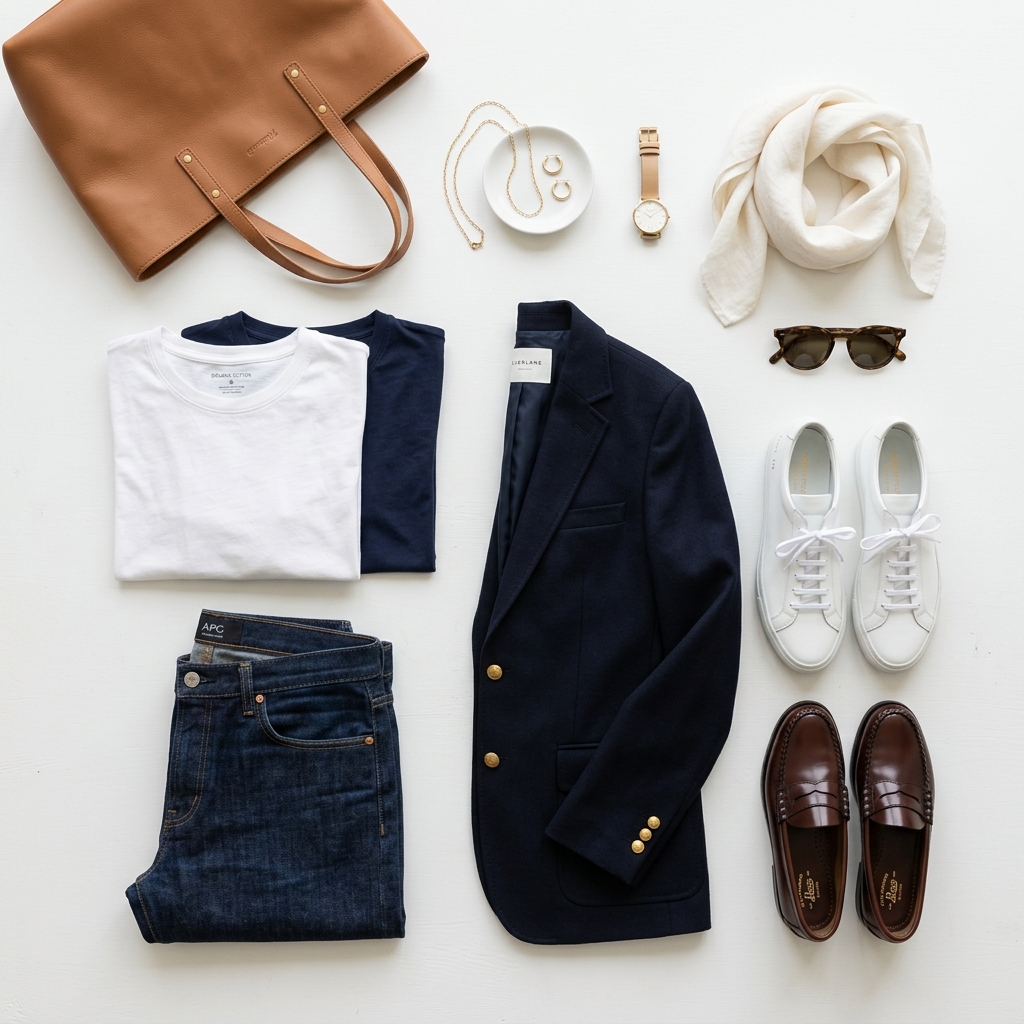
A functional capsule wardrobe for a working professional (four-season climate) typically includes these categories:
Tops (8-10 pieces): Mix of basic tees, blouses, a button-down, and a couple of knit sweaters. Stick to a core color palette. Neutral bases (white, black, navy, gray, beige) mix with everything. Add two or four accent colors that you love.
Bottoms (4-6 pieces): One pair of jeans, one pair of dress pants or tailored trousers, one pair of casual chinos or wide-leg pants, and optionally a skirt. If you wear dresses frequently, adjust the ratio.
Dresses (2-4 pieces): One casual day dress and one that works for dinners or office settings. Choose silhouettes that work with flats and heels.
Outerwear (2-4 pieces): A structured blazer, a casual jacket (denim or leather), a warm winter coat, and a lightweight rain layer. Four-season climates need all four. Mild climates can work with two.
Shoes (4-6 pairs): Everyday sneakers or flats, a versatile heeled shoe, boots, sandals (seasonal), and one pair for exercise.
Step 3: Choose Your Color Palette
This is where most capsule wardrobes succeed or fail. If your pieces don’t color-coordinate, you end up with individual nice items that don’t work together.
The simplest approach: pick two or four neutral base colors and two accent colors.
Example palette: Black, white, camel, navy (neutrals) + rust, sage green (accents). Every bottom matches every top. Every jacket works over every outfit. That’s the math working in your favor.
Avoid adding a new color for every purchase. Each new color reduces mix-and-match potential unless it coordinates with your existing palette.
Step 4: Fill the Gaps (Quality Over Quantity)
After your audit, you’ll likely have a list of 5-10 items to buy. Resist the urge to fill every gap at once. Buy one or two pieces per month, prioritizing the items you’ll wear most frequently.
When shopping for capsule pieces, prioritize:
- Fabric quality over brand name. A $50 cotton tee from Uniqlo can outlast a $120 designer tee if the fabric weight and construction are better. Feel the fabric. Check the seams.
- Fit over fashion. Trends cycle every 6-18 months. A well-fitting classic piece stays relevant for years. Invest in tailoring if needed ($15-30 per garment is usually enough).
- Versatility over uniqueness. Every capsule piece should work in at least four different outfits. If you can only imagine it in one look, it doesn’t belong in a capsule wardrobe.
- Cost per wear, not sticker price. A $200 blazer worn 100 times over two years costs $2 per wear. A $40 trendy jacket worn five times costs $8 per wear. The expensive piece is actually cheaper.

Common Mistakes to Avoid
Going too minimal too fast. Cutting your wardrobe from 100 pieces to 25 overnight creates anxiety and buyer’s remorse. Start with 40-50 pieces and reduce gradually over a few months as you learn what you actually reach for.
Ignoring your actual lifestyle. A capsule wardrobe full of office blazers doesn’t work if you work from home. Build for the life you live, not the one you aspire to.
Choosing “flattering” over comfortable. If a piece looks great but you avoid wearing it because it’s uncomfortable, it’s wasting a slot. Comfort is non-negotiable in a small wardrobe.
Forgetting about laundry cycles. If you do laundry once a week, you need at least 7 days’ worth of underwear and socks, and enough tops and bottoms to get through the week with some variety. Plan your numbers around your actual laundry habits.
FAQ
How many items should be in a capsule wardrobe?
Most capsule wardrobes work best with 25-40 pieces, not counting undergarments, workout clothes, and special-occasion wear. Start with 35-40 if you’re new to the concept and pare down over time.
Do I need to throw everything else away?
No. Store off-season items separately, and keep a small “maybe” box for six months. If you don’t reach for anything in the maybe box during that time, donate it. The gradual approach reduces regret.
Can I still follow trends with a capsule wardrobe?
Yes, but through accessories, not core pieces. Scarves, jewelry, bags, and shoes can add trendiness without disrupting your wardrobe’s foundation. Swap in one or two trendy accessories per season.
How do I handle seasons in a capsule wardrobe?
Two approaches work: rotate your entire capsule seasonally (spring/summer and fall/winter versions), or build a year-round capsule with layering pieces that adapt to weather. The second approach works better in mild climates. Cold climates usually need seasonal rotation.
This fabric guide is an absolute lifesaver. I’ve always struggled with finding the perfect fit in premium product. Does this brand run true to size, or should I size down if I prefer a more structured, tailored silhouette?
Hey Brandon! Glad this guide helped! For a structured, tailored silhouette in raw or premium denim, I actually recommend sticking true to size but opting for a slim-straight cut rather than sizing down. Sizing down in 100% cotton can make the waist painfully tight and restrict your movement, whereas a tailored cut will mold perfectly to your body over time while maintaining its structure. — James