
Disclaimer: This review is independent and reader-supported. When you buy through our links, we may earn an affiliate commission at no extra cost to you.
There is a moment that happens to every watch enthusiast. You are wearing a cheap quartz watch. It does its job. It tells time. But then you see someone wearing a mechanical automatic watch—the sweep of the second hand, the visible movement through a caseback, the satisfying weight on the wrist—and suddenly you understand what all the fuss is about.
The question is where to start. Luxury Swiss watches from Rolex, Omega, or TAG Heuer start at several thousand dollars. That is a steep entry fee for a hobby you might just be exploring.
Fortunately, three brands dominate the sweet spot between disposable quartz and inaccessible luxury: Tissot, Seiko, and Hamilton. All three offer genuine automatic movements, solid build quality, and respected heritage—at price points that range from $200 to $700.
Here is an honest comparison from someone who has owned watches from all three.
The Movements: What Powers These Watches?
Before comparing the brands, it helps to understand the engines under the hood.
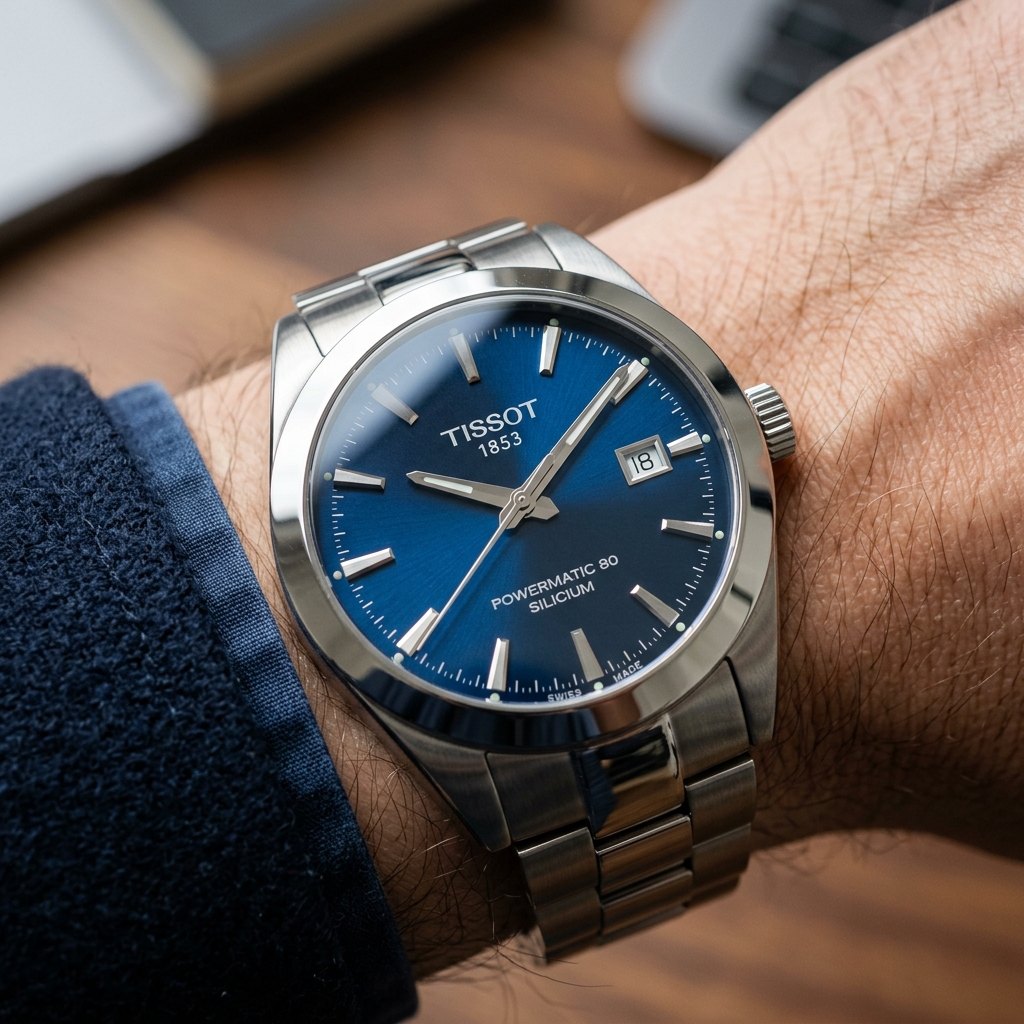
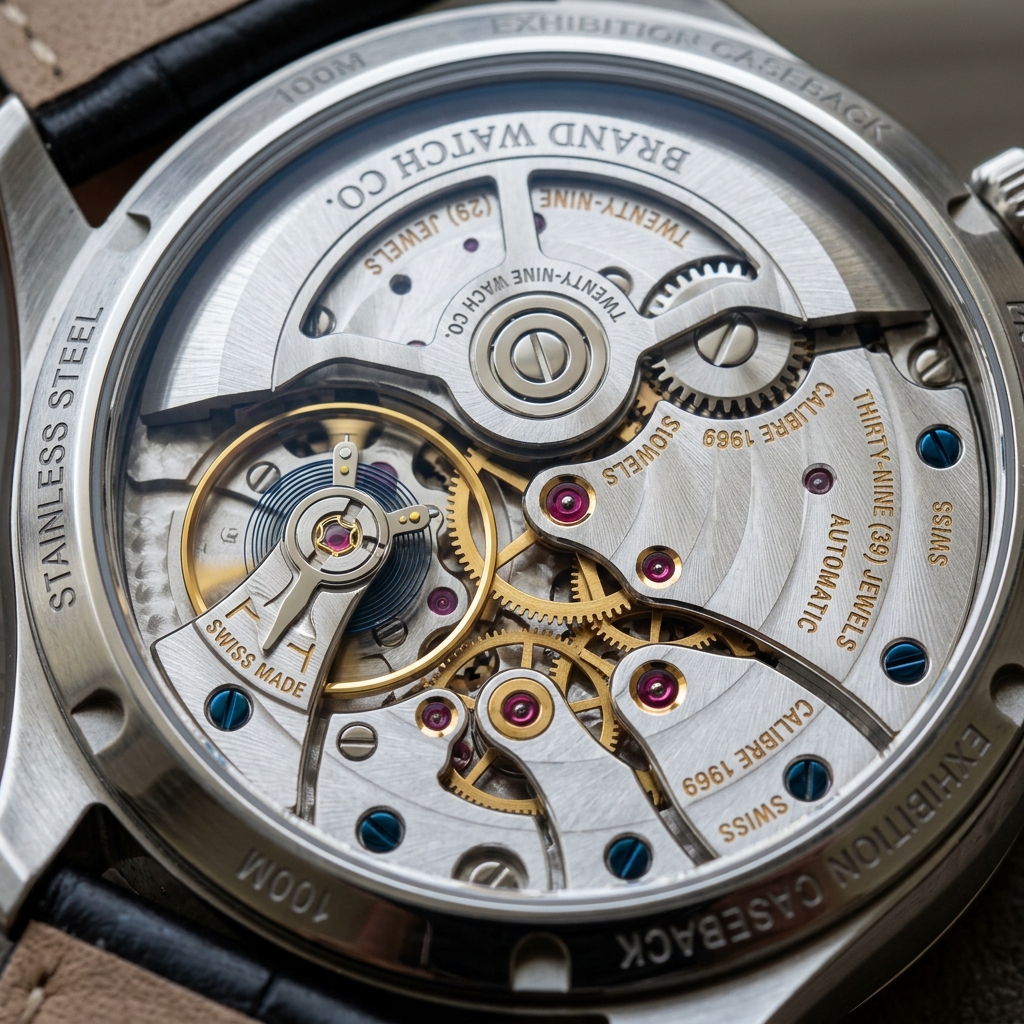
Tissot uses the Powermatic 80 movement (a modified ETA C07.111). Its headline feature is the 80-hour power reserve—the longest in this price range. That means you can take it off Friday evening and it will still be running Monday morning. The trade-off is that the Powermatic 80 ticks at a slower 21,600 vibrations per hour (vph), which makes the second hand’s sweep visibly less smooth than higher-beat movements.
Seiko uses their in-house 4R35 and 4R36 calibers in their entry-level Presage line. These movements offer a 41-hour power reserve and beat at 21,600 vph. Seiko’s quality control on these movements is excellent for the price, but they are not COSC chronometer certified and typically run at ±20 seconds per day accuracy.
Hamilton uses the H-10 movement (another ETA derivative, closely related to the Powermatic 80). It also delivers an 80-hour power reserve at 21,600 vph. Hamilton’s version includes a Nivachoc shock protection system and a Nivaflex mainspring, making it slightly more durable in daily wear scenarios.
| Feature | Tissot (Powermatic 80) | Seiko (4R35/4R36) | Hamilton (H-10) |
|---|---|---|---|
| Power Reserve | 80 hours | 41 hours | 80 hours |
| Beat Rate | 21,600 vph | 21,600 vph | 21,600 vph |
| Accuracy | ±15 sec/day | ±20 sec/day | ±15 sec/day |
| Hacking | Yes | Yes | Yes |
| Hand-winding | Yes | Yes (4R36 only) | Yes |
Tissot: The Swiss Heritage Play
Price range: $350-$650
Tissot is the most accessible genuine Swiss watchmaker. Founded in 1853 in Le Locle, Switzerland, it has been part of the Swatch Group since 1983—the same conglomerate that owns Omega, Longines, and Breguet. This means Tissot benefits from shared engineering, movement technology, and supply chain advantages that no independent brand at this price can match.
Best Model: Tissot PRX Powermatic 80 ($375)
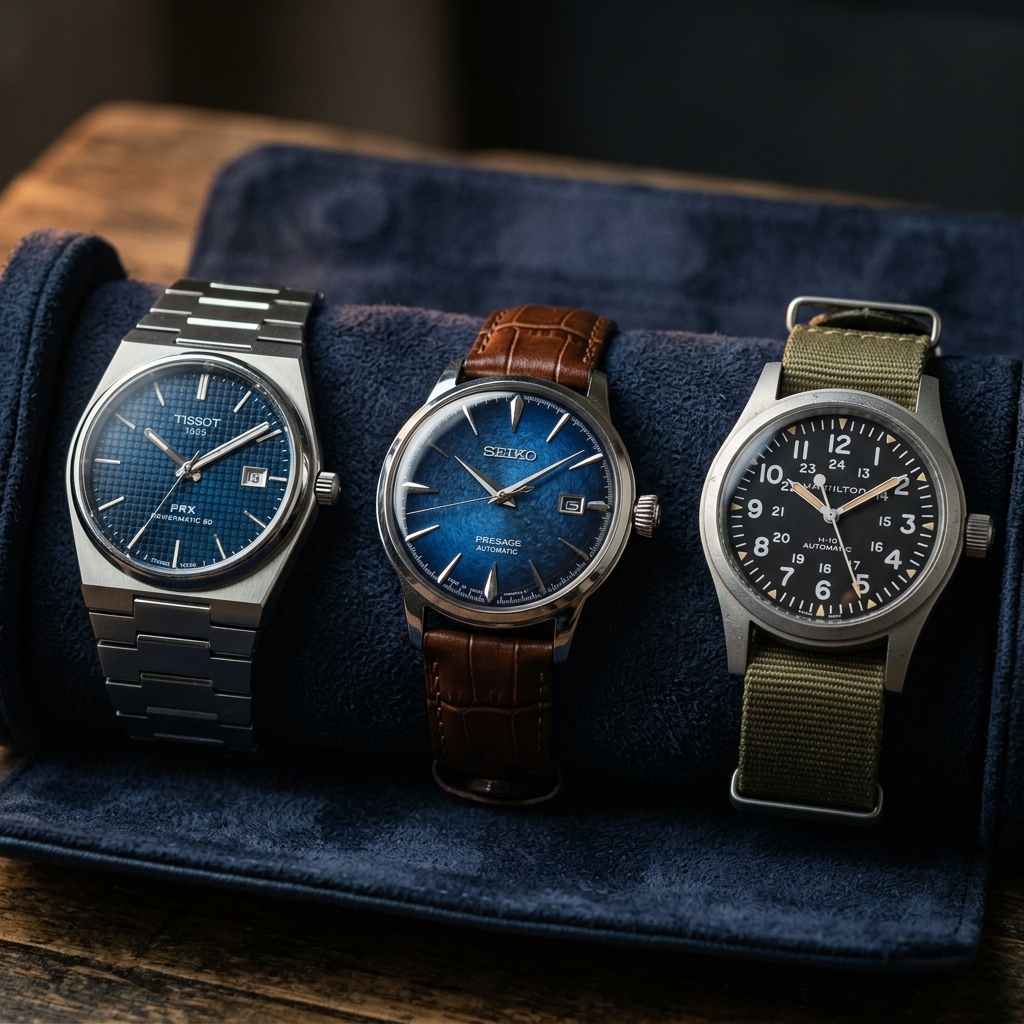
The PRX is the watch that made Tissot relevant to a younger audience. Its integrated bracelet design draws obvious inspiration from the Audemars Piguet Royal Oak—a watch that costs fifty times more—and its 40mm case diameter sits comfortably on most wrist sizes.
The dial finishing is remarkable for a $375 watch. The sunburst blue version catches light beautifully, and the applied indices have a polished beveling that you genuinely do not expect at this price. The integrated steel bracelet has alternating polished and brushed links that catch light in a very satisfying way.
Strengths: Swiss-made cachet, 80-hour power reserve, integrated bracelet design, excellent dial quality for the price.
Weaknesses: The bracelet clasp is the weak point. It is a simple friction fold-over clasp without micro-adjustment, which means you cannot fine-tune the fit. It also lacks a diver’s extension.
Seiko: The Value Champion
Price range: $200-$500
Seiko is a fully vertically integrated manufacturer. They make everything in-house: movements, cases, dials, crystals, hands, and even the lubricants. No other watchmaker at this price level can claim that. This vertical integration allows Seiko to deliver extraordinary value—you are paying for the watch, not for marketing or licensed movement suppliers.
Best Model: Seiko Presage Cocktail Time SRPB43 ($325)
The Cocktail Time is, in my opinion, the most beautiful watch dial available under $500 from any brand. Period. The sunburst pattern radiates from the center in a way that changes character dramatically depending on the lighting angle. In direct light, it is a vivid ice blue. In shadow, it deepens into a smoky grey.
At 40.5mm with a thickness of 11.8mm, it wears slightly larger than the PRX but is still office-appropriate under a shirt cuff. The Hardlex crystal is not sapphire (Seiko saves that for their higher-tier models), but it is significantly more scratch-resistant than standard mineral glass.
Strengths: Stunning dial quality, in-house movement, unbeatable value, excellent lug-to-lug proportions for medium wrists.
Weaknesses: 41-hour power reserve is half the Tissot and Hamilton. The Hardlex crystal is not as scratch-resistant as sapphire. The stock leather strap feels cheap and should be replaced immediately.
Hamilton: The Character Actor
Price range: $400-$700
Hamilton occupies a fascinating middle ground. Originally an American company founded in Lancaster, Pennsylvania in 1892, it is now Swiss-owned (also part of the Swatch Group) but retains its American design DNA. Hamilton watches have appeared in over 500 Hollywood films, including Interstellar, The Martian, and Tenet.
Best Model: Hamilton Khaki Field Mechanical ($475)
The Khaki Field Mechanical is a direct descendant of the military watches Hamilton produced for the US Army during World War II. The 38mm case is intentionally small by modern standards, and this is a feature, not a bug. It sits flat on the wrist, slides under a cuff effortlessly, and wears with the kind of understated confidence that oversized watches simply cannot achieve.
The matte black dial with cream-colored Super-LumiNova numerals creates a stunning vintage military aesthetic. The hand-wound H-50 movement (no automatic rotor, so the watch is thinner) delivers 80 hours of power reserve in a remarkably slim 9.5mm case profile.
Strengths: Iconic military heritage, 80-hour hand-wound movement, slim case, Hollywood provenance, NATO strap included.
Weaknesses: Hand-wound only—you must wind it manually every few days. The 38mm size may feel small for those accustomed to 42mm+ watches. Sapphire crystal is standard, but the crystal sits slightly recessed, which can catch lint.
Head-to-Head: Which Should You Buy?
Buy Tissot PRX if…
- You want a versatile everyday watch that works with both casual and dressy outfits
- Integrated bracelet design appeals to you
- You want the longest power reserve (80 hours)
- “Swiss Made” on the dial matters to you
Buy Seiko Presage if…
- You are on a tighter budget and want maximum craft for your dollar
- Dial beauty is your top priority
- You appreciate in-house manufacturing heritage
- You plan to swap the strap for a better aftermarket option anyway
Buy Hamilton Khaki Field if…
- You love military-inspired aesthetics and vintage character
- You prefer a smaller, slimmer watch that disappears under a cuff
- Hand-winding is a feature, not a chore, for you
- Hollywood connections and brand history add emotional value
A Word on Resale Value
For those considering long-term value, here is a reality check:
- Tissot holds approximately 40-50% of retail value on the secondary market
- Seiko holds approximately 50-60% of retail (Presage models with limited-edition dials hold better)
- Hamilton holds approximately 45-55% of retail
None of these watches are investment pieces. You will lose money if you sell them. But the relatively low depreciation curve means that if you buy wisely—especially during sales events or from authorized dealers offering discounts—the cost of ownership is remarkably affordable.
The Bottom Line
All three of these brands deliver genuine automatic watchmaking at prices that would have been unthinkable 20 years ago. You genuinely cannot go wrong with any of them.
If I could only own one watch from this comparison, I would choose the Seiko Presage Cocktail Time. Not because it has the longest power reserve or the most prestigious country of origin—but because every single time I look at that dial, I feel something. And that, ultimately, is what a watch is for.
The Tissot PRX is the safest, most versatile recommendation for someone buying their first automatic watch. And the Hamilton Khaki Field is the most characterful, most storied option for anyone who values heritage over specs.
Frequently Asked Questions
What is the best entry-level automatic watch under $500?
For most people, the Tissot PRX Powermatic 80 at around $475 offers the best combination of Swiss movement, 80-hour power reserve, versatile design, and brand recognition. If you prefer Japanese craftsmanship with artistic dial work, the Seiko Presage Cocktail Time at $295-425 is exceptional value.
Do automatic watches need servicing?
Yes. Most manufacturers recommend a full service (cleaning, lubrication, regulation) every 3-5 years. ETA-based movements (used in Tissot and Hamilton) typically cost $150-250 for servicing. Seiko’s 4R35/4R36 movements are simpler and often cost $100-175 to service. Skipping regular servicing can lead to accuracy degradation and eventual mechanical failure.
How accurate are entry-level automatic watches compared to quartz?
Entry-level automatics typically run within plus or minus 15-25 seconds per day. Quartz watches are accurate to about plus or minus 1 second per day. If absolute timekeeping precision matters to you, quartz is objectively superior. Automatic watches are valued for their mechanical craftsmanship, sweep second hand, and the fact that they never need a battery.
Is it worth buying a Swiss watch over a Japanese one at this price?
At the entry level ($200-500), the country of origin matters less than the specific movement and finishing quality. Seiko’s in-house movements offer excellent reliability, and their dial craftsmanship often matches or exceeds Swiss competitors at the same price. You are paying a moderate premium for the “Swiss Made” label with Tissot, but the Powermatic 80 movement genuinely justifies it with its 80-hour power reserve.