
Last updated: May 2026. This article is reviewed quarterly.
Walk into any luxury bedding department, and you will see sheets advertised with thread counts of 400, 800, or even 1000. Consumers have been conditioned to associate higher numbers with premium luxury and soft textures. The marketing is highly effective.
Because of this conditioning, some clothing brands have started using “thread count” as a marketing buzzword for their premium t-shirts. They print numbers on their labels to convince you that a higher thread count makes their jersey knit fabric superior.
If you understand how textiles are constructed, this claim falls apart instantly. The physical principles that govern high-end bedsheets do not apply to the t-shirt in your closet. In fact, relying on thread count to judge a t-shirt is a fundamental misunderstanding of fabric technology. It is a metric designed for woven fabrics, and using it for knit jersey is a distraction from the factors that actually determine durability and feel.
To find a truly premium t-shirt that holds its shape after dozens of washes, you must look past the superficial marketing numbers. You need to understand fiber length, yarn processing, fabric weight, and structural stitching.
The Structural Difference: Knits vs. Wovens
The primary reason thread count is a meaningless metric for t-shirts lies in the fundamental way the fabric is constructed.
Woven fabrics (used for bedsheets, dress shirts, and denim) are made on a loom by interlacing two sets of yarns at right angles: the warp (which runs vertically) and the weft (which runs horizontally). In this context, thread count is a legitimate physical measurement: it is the total number of warp and weft threads in one square inch of fabric.
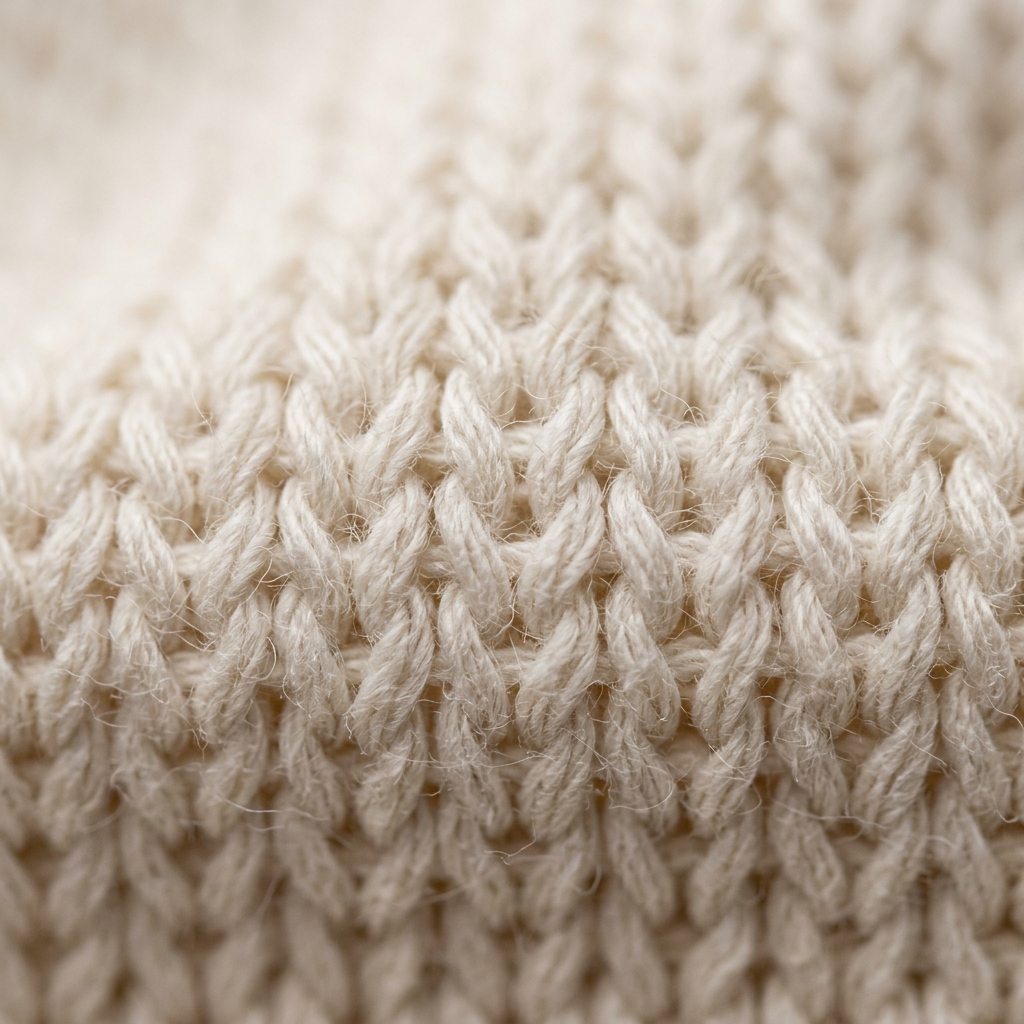
Jersey knit fabrics (used for almost all t-shirts) are constructed in an entirely different way. Instead of two perpendicular sets of threads crossing over each other, knits are made by interlocking loops of a single continuous yarn. The fabric is produced on circular knitting machines that create rows of loops, called courses and wales, similar to hand knitting but on a micro scale.
Because jersey is a knit structure made of continuous loops, there are no perpendicular warp and weft threads to count. Measuring the “thread count” of a t-shirt is technically impossible in the traditional textile sense. Any brand that advertises a specific “thread count” for a knit garment is either making up a number for marketing purposes or confusing standard thread density with weave counts.
The Insider Perspective: Skepticism on Reddit
Among fashion enthusiasts and textile experts, the use of “thread count” to describe t-shirts is met with deep skepticism. In the r/malefashionadvice community, users frequently discuss how brands use misleading terminology to justify high prices for average clothing.
A user on r/malefashionadvice explained the reality of t-shirt marketing:
“Whenever I see a brand advertising ‘high thread count’ t-shirts, it is an immediate red flag. It is a sign that their marketing team is copying bedsheet buzzwords because they do not have real quality features to talk about. A premium knit is about the quality of the yarn and the weight of the fabric, not some made-up loop count.”
This perspective highlights the importance of understanding the physical product over the promotional copy. When a brand cannot explain their sourcing or fabric processing, they resort to familiar consumer buzzwords.
What Actually Matters: Yarn Processing and Fiber Quality
If thread count is a distraction, how do you evaluate the fabric of a t-shirt before you buy it? The answer lies in the raw material and how that material is spun into yarn.
The quality of the cotton fiber itself is the single most important factor. You should look for two key elements:
1. Extra-Long Staple (ELS) Cotton: The length of the individual cotton fiber is called the “staple.” Standard cotton uses short-staple fibers, which have millions of tiny ends that stick out of the yarn, leading to a fuzzy texture and eventual pilling. ELS cottons (such as Supima, Pima, or Egyptian cotton) feature fibers that are twice as long as standard cotton. This length allows the fibers to be spun into a incredibly smooth, strong, and lustrous yarn that resists pilling and stays soft over time.
2. Ring-Spun and Combed Yarns: Standard cheap t-shirts are made from “carded open-end” cotton. This process is fast and inexpensive, but it produces a rough, uneven yarn filled with short fibers and impurities. Premium t-shirts use combed, ring-spun cotton. The cotton fibers are continuously twisted and thinned to make a strong, smooth rope of yarn. Before spinning, the cotton is combed to remove short, weak fibers and small seed particles. The result is a clean, uniform yarn that feels exceptionally soft against the skin.
When you touch a t-shirt made from combed, ring-spun Supima cotton, you will instantly notice the difference. It feels dense, smooth, and cool, whereas a standard carded cotton shirt feels scratchy and thin.
Fabric Weight: Grams per Square Meter (GSM)
Instead of thread count, the standard industry metric for measuring t-shirt fabric is GSM, which stands for Grams per Square Meter. This measures the weight and density of the fabric, which directly affects how the shirt hangs on your body and how it holds up to wear.
Understanding GSM allows you to choose the right shirt for your style and environment:
- Lightweight (120–140 GSM): These shirts are thin, airy, and highly breathable. They are excellent for hot summer days or as undershirts, but they tend to drape softly over the body and may show wrinkles easily.
- Midweight (150–175 GSM): This is the sweet spot for most modern t-shirts. It offers a clean balance of structure and breathability. It is substantial enough to hide undergarments but light enough to wear comfortably in warm weather.
- Heavyweight (180–240+ GSM): These are thick, structured shirts with a heavy drape. They offer a classic, retro aesthetic with clean lines and minimal wrinkling. They are incredibly durable and hold their shape well, but they can feel warm in high humidity.
A higher GSM does not automatically mean a shirt is higher quality. A lightweight 130 GSM shirt made from combed long-staple cotton can be far superior to a heavy 220 GSM shirt made from rough, carded open-end yarn. The weight is a personal preference; the yarn quality is an absolute standard.

Construction Details: Stitching and Seams
A premium fabric is wasted if the shirt is poorly assembled. The structural details of a t-shirt tell you how long it will survive the agitation of a washing machine.
When inspecting a shirt, look for these specific indicators of quality construction:
- Shoulder-to-Shoulder Taping: This involves sewing a thin strip of fabric along the inside shoulder seams and across the back of the neck. This tape hides the raw seam edges for comfort and reinforces the shoulders, preventing the shirt from stretching out of shape when hung on a hanger.
- Stitch Density: Count the stitches along the hem. A cheap shirt will have wide, loose stitches that can easily snag and unravel. A high-quality shirt has tight, dense stitching (high stitches per inch, or SPI) that creates a durable, flexible seam.
- Side-Seam vs. Tubular Construction: Tubular shirts are made from a seamless tube of fabric. While some appreciate the lack of side seams, tubular knits can twist over time if the fabric was not knit evenly. Side-seamed shirts are cut and sewn from flat fabric panels, allowing for a more tailored, anatomical fit that holds its shape wash after wash.
By focusing on these physical details, you can easily separate truly premium garments from overpriced marketing hype. Skip the made-up “thread count” numbers and look for ring-spun long-staple cotton, a clear GSM rating, and reinforced shoulder seams.
What is your preferred t-shirt style? Do you lean toward lightweight, breathable fabrics, or do you prefer the heavy, structured drape of heavyweight cotton? Let us know in the comments below.