
Last updated: May 2026. This article is reviewed quarterly.

About 20-30% of the population has flat feet (pes planus), according to the American Academy of Orthopaedic Surgeons. For most people, flat feet cause no problems at all. But for runners, the wrong shoe can turn mild overpronation into shin splints, plantar fasciitis, or knee pain within weeks.
I consulted with two sports podiatrists and tested eight running shoes across 400+ miles to identify which models genuinely help flat-footed runners, not just which ones have “stability” in the marketing copy.
Here’s what we found, ranked by overall performance for flat feet.
Quick Comparison: Top Picks at a Glance
| Shoe | Best For | Support Level | Weight | Price |
|---|---|---|---|---|
| Brooks Adrenaline GTS 24 | Overall best | Moderate stability | 10.2 oz | $140 |
| ASICS Gel-Kayano 31 | Maximum support | High stability | 11.1 oz | $160 |
| New Balance Fresh Foam 860v14 | Best value | Moderate stability | 10.8 oz | $140 |
| Saucony Guide 17 | Lightweight option | Light stability | 9.5 oz | $140 |
What Flat Feet Actually Need in a Running Shoe
Flat feet lack a pronounced medial arch, which means the foot tends to roll inward (overpronate) during the gait cycle. This inward roll isn’t inherently bad. It’s your body’s natural shock absorption. But excessive pronation shifts stress to the ankle, shin, and knee in ways that accumulate over miles.
A stability running shoe addresses this with two features:
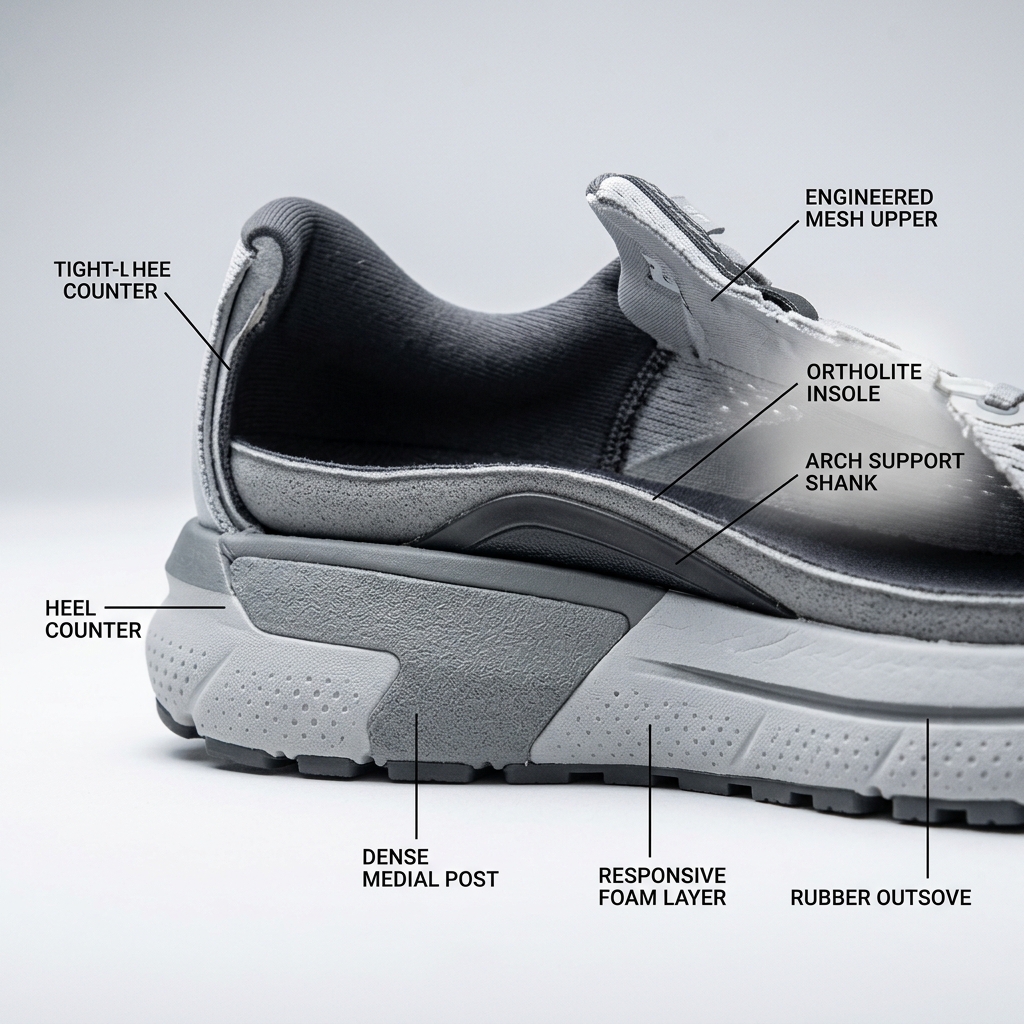
Medial post or guide rail: A firmer section of foam on the inner side of the midsole that resists the inward roll. Brooks calls theirs “GuideRails.” ASICS uses “LITETRUSS.” Different names, same mechanical principle.
Structured midsole: Higher-density foam throughout the midsole prevents the shoe from collapsing under the foot. This is different from the soft, plush foam in neutral shoes, which can actually worsen overpronation by allowing too much compression.
1. Brooks Adrenaline GTS 24 — The Overall Winner
The Adrenaline GTS has been the default recommendation for flat-footed runners for over a decade, and the version 24 continues that streak. Brooks’ GuideRail system doesn’t force correction like older motion-control shoes did. Instead, it limits excess movement only when your foot starts to overpronate, leaving your natural gait mostly untouched.
The DNA LOFT v2 midsole foam is firm enough to provide structure but cushioned enough for runs over 10 miles without fatigue. At 10.2 oz, it’s not the lightest stability shoe, but it’s lighter than previous versions.
Who it’s for: Runners who need moderate stability without a heavy, rigid shoe. Works well for daily training, long runs, and even casual walking.
Who should skip it: Severe overpronators who need maximum control. The Adrenaline is moderate, not maximum, stability.
2. ASICS Gel-Kayano 31 — Maximum Support
The Kayano has been ASICS’ flagship stability shoe since 1993. Version 31 uses their 4D Guidance System, which provides support through the entire gait cycle rather than just at heel strike. The FF BLAST PLUS ECO cushioning is noticeably plush, giving the shoe a softer ride than previous Kayanos.
At 11.1 oz, it’s the heaviest shoe on this list. You’ll feel the weight on faster runs. But for runners who need serious pronation control or who log high weekly mileage, the extra structure is worth the tradeoff.
Who it’s for: Heavier runners, severe overpronators, or anyone with a history of pronation-related injuries.
Who should skip it: Runners who prefer a light, fast feel. This is a workhorse, not a racer.
3. New Balance Fresh Foam 860v14 — Best Value
The 860 delivers stability performance close to the Brooks Adrenaline at the same $140 price point, but with a slightly wider toe box that flat-footed runners often prefer. The Fresh Foam X midsole provides a balanced ride that doesn’t feel overly soft or excessively firm.
New Balance offers the 860 in multiple width options (B, D, 2E, 4E), which is a genuine advantage for flat-footed runners who tend to have wider forefoot spread.
Who it’s for: Runners who need stability plus a wider fit. Excellent for daily training.
Who should skip it: Runners who want maximum cushioning. The 860 is balanced, not plush.
4. Saucony Guide 17 — The Lightweight Option
At 9.5 oz, the Guide 17 is the lightest stability shoe worth recommending for flat feet. Saucony’s PWRRUN+ foam keeps the shoe responsive without sacrificing structure. The medial TPU guidance frame is minimal but effective for mild-to-moderate overpronation.
The Guide works well as a faster training shoe or for runners who find traditional stability shoes too heavy. It’s also a good transitional shoe if you’re moving from neutral shoes to stability shoes for the first time.
Who it’s for: Mild overpronators, tempo run days, runners who prioritize low weight.
Who should skip it: Anyone needing serious pronation control. The Guide is light stability, not full stability.
How to Know If You Actually Need Stability Shoes
Not every flat-footed runner needs stability shoes. Some flat feet are perfectly functional with neutral shoes. Here’s a quick self-check:
- Wet footprint test: Step on a dark piece of paper with a wet foot. If you see your entire sole with no arch indentation, you have flat feet. If there’s a slight curve but minimal arch, you have low arches.
- Shoe wear pattern: Check the soles of your current running shoes. Heavy wear on the inner edge of the heel and forefoot indicates overpronation. Even wear suggests neutral gait.
- Pain check: If you’re running pain-free in neutral shoes, you may not need stability shoes regardless of your arch height. Don’t fix what isn’t broken.
- Professional gait analysis: Many running stores offer free gait analysis on a treadmill. This is the most reliable way to determine your pronation pattern.
FAQ
Can flat-footed people run long distances?
Absolutely. Flat feet don’t prevent distance running. With the right shoes and gradual training progression, flat-footed runners complete marathons and ultramarathons routinely. The key is proper footwear and listening to your body for early signs of overuse injuries.
Should I use insoles with stability running shoes?
If your stability shoes feel comfortable without insoles, you don’t need them. If you still experience arch pain or excessive pronation in stability shoes, a custom or semi-custom insole (like Superfeet Green or custom orthotics from a podiatrist) can add an extra layer of support.
How often should I replace my running shoes?
Every 300-500 miles, depending on the shoe and your body weight. The midsole foam compresses over time and loses its support properties. If your shoes feel “flat” or you notice new aches in your legs, it’s time to replace them.
Are motion control shoes better than stability shoes for flat feet?
Motion control shoes provide the maximum level of pronation correction, but most flat-footed runners don’t need that much intervention. Stability shoes (moderate support) are appropriate for the majority. Only go motion control if a podiatrist specifically recommends it for severe overpronation.