
Last updated: June 2026. This article is reviewed quarterly.
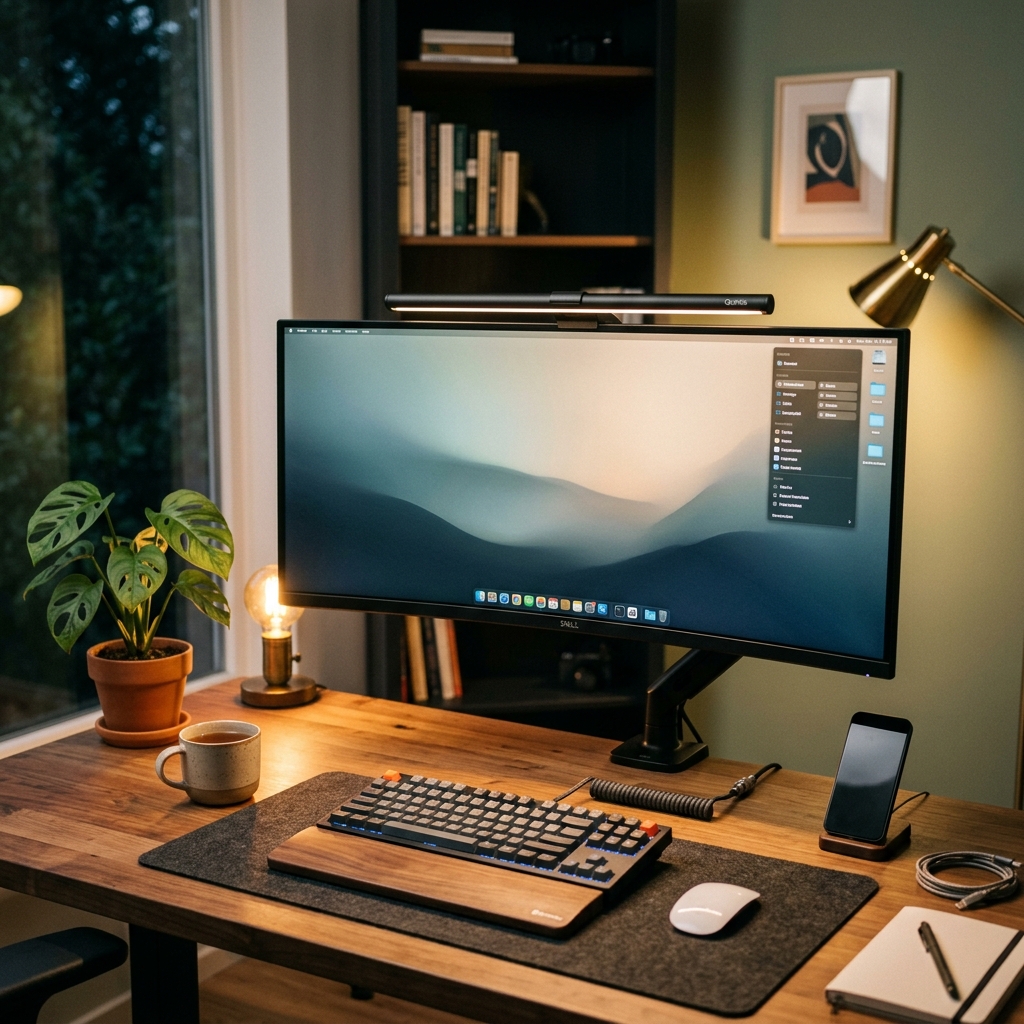
Turn off the overhead lights in your office, and your eyes immediately begin to work twice as hard. Working in a dark room with only a bright monitor creates an intense contrast boundary that forces your pupils to dilate and constrict repeatedly as your eyes move across the screen. Over an eight-hour shift, this micro-strain accumulates into burning eyes, tension headaches, and physical fatigue.
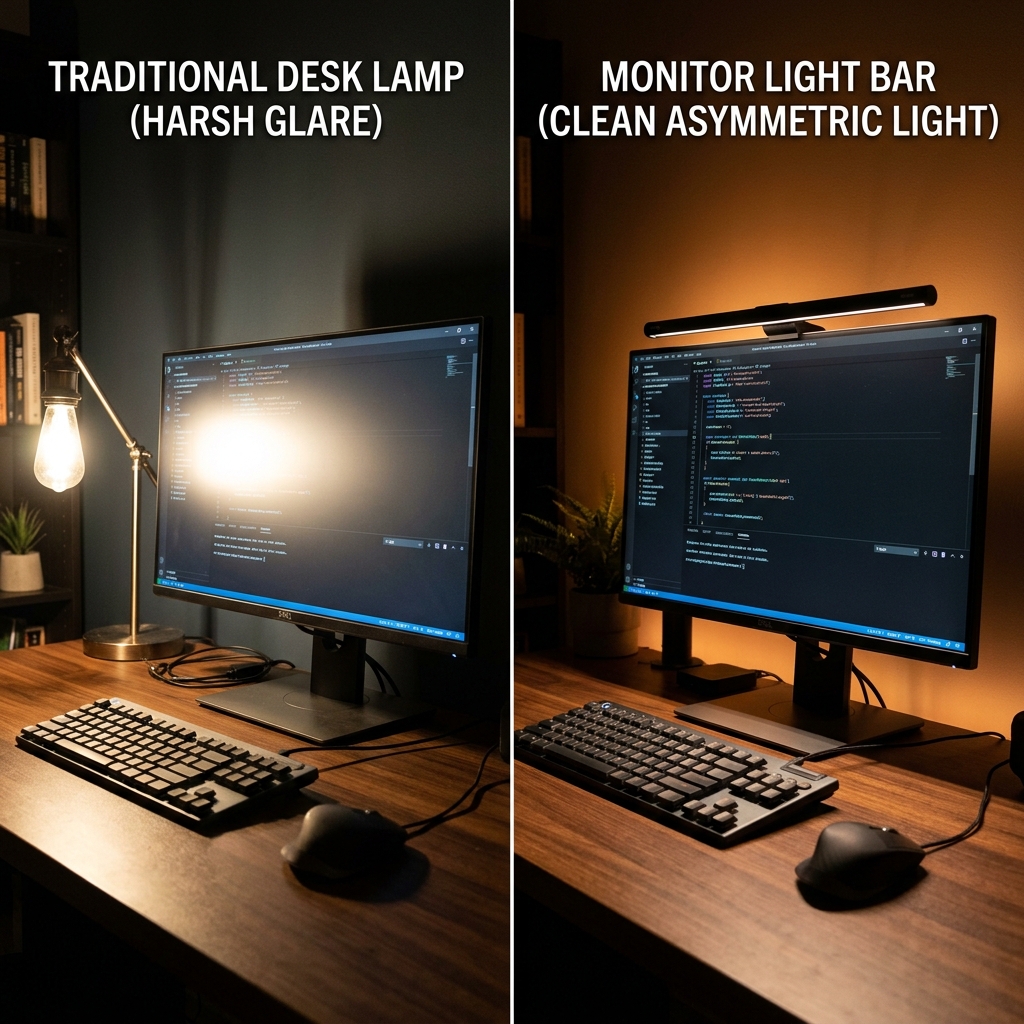
The standard solution has always been to throw a traditional gooseneck desk lamp next to the monitor. However, traditional lamps introduce a new problem: reflection glare. The light bulb bounces off the glass panel of your monitor, creating a bright haze that obscures text and ruins screen contrast.
To find a workspace lighting solution that genuinely reduces eye fatigue, I spent 30 days testing the latest desk lighting technology. I compared high-end monitor light bars like the BenQ ScreenBar against traditional LED swing-arm lamps and budget alternatives. As a home style editor who spends ten hours a day looking at screens, here is my hands-on evaluation of the best desk lamps for eye comfort.
—
The Contenders: Light Bars vs. Traditional Lamps
Before diving into the testing results, let’s look at how the different lighting architectures compare in design and cost.
| Feature | Traditional Swing-Arm LED | BenQ ScreenBar Pro | Quntis ScreenLinear Bar |
| :— | :— | :— | :— |
| Retail Price | $35.00 – $60.00 | $139.00 – $149.00 | $39.00 – $49.00 |
| Mounting Style | Heavy base or desk C-clamp | Weighted monitor clip | Spring-loaded monitor clip |
| Light Projection | Symmetrical cone (causes glare) | Asymmetric optical (no glare) | Semi-asymmetric optical |
| Control Interface| Inline cord switch or base dial | Automatic auto-dimming sensor | Wired control button |
The main difference lies in the optical engineering. Traditional lamps cast light in all directions, whereas monitor light bars are designed to project light at a strict angle, keeping the screen dark while illuminating the desk area below it.
—
Why Symmetrical Light Fails Your Screen
The core problem with traditional desk lamps is their symmetrical light distribution.
When you place a standard light bulb next to a modern monitor, the light rays hit the screen’s outer glass layer. Even with anti-glare matte coatings, this light scatters, washing out black levels and producing a constant reflection. Your eyes must work harder to resolve the text behind this veil of reflected light, leading to rapid eye strain.
Monitor light bars solve this through asymmetric optical design. By utilizing internal reflectors, they direct the light beam in a narrow wedge shape that begins precisely at the front bezel of the monitor and extends outward onto your desk.
—
Sourcing the Science: Contrast and Color Temperature
Ergonomists agree that the key to eye comfort is color temperature control and balanced ambient contrast.
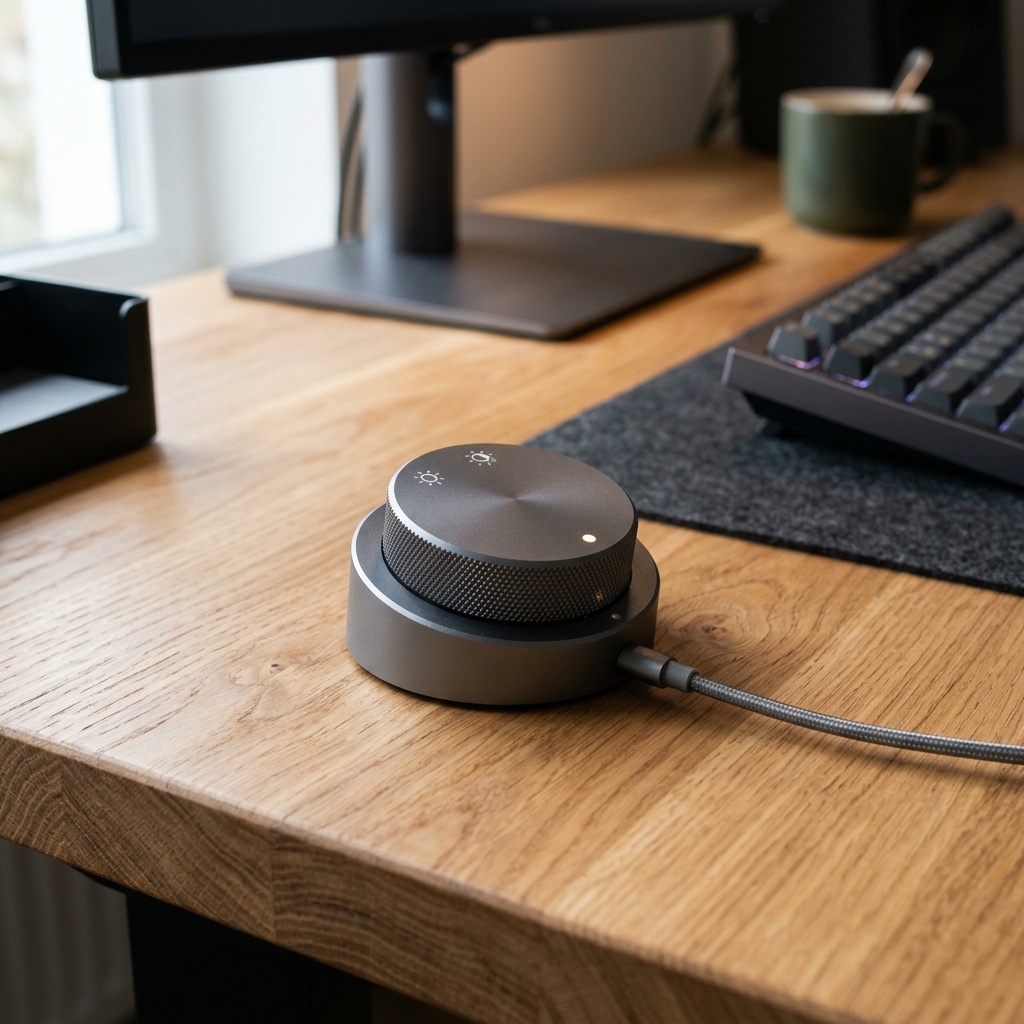
* Color Temperature Adjustment: During the day, cooler light (5000K to 6500K) helps maintain alertness and matches natural daylight. In the evening, shifting to a warm amber light (2700K to 3000K) reduces blue light exposure, helping your brain prepare for sleep.
* Auto-Dimming Capabilities: The BenQ ScreenBar Pro features an active ambient light sensor that reads the surrounding room brightness and automatically adjusts the light bar’s output to maintain a constant 500 lux on your desk surface, which is the recommended level for office work.
On home office setup forums, community members emphasize the importance of balancing monitor brightness with ambient light:
“I used to get severe headaches by 4 PM every day. I bought a cheap monitor light bar and paired it with a cheap warm LED strip behind my monitor for bias lighting. The difference was night and day. My eyes don’t feel tired at all anymore because the contrast boundary around my screen is completely gone.”
Having a source of light behind the monitor (bias lighting) in addition to a light bar creates a gentle gradient of light that is incredibly relaxing for the eyes.
—
Hands-On Testing: BenQ ScreenBar vs. Budget Alternatives
During my testing, I compared the premium BenQ ScreenBar Pro against the budget-friendly Quntis light bar.
The BenQ Experience
The BenQ ScreenBar Pro justified its premium price tag through its mounting engineering. It sits securely on thin-bezel screens without covering any pixels, and the counterweight system handles curved monitors easily. The light beam is exceptionally clean, with a sharp cutoff that ensures zero light hits the screen or shines directly into your eyes.
The Quntis Experience
The Quntis ScreenLinear bar offers about 80% of the BenQ’s performance for a third of the price. The light is bright and color temperature controls work well. However, the asymmetric cutoff is less precise, resulting in a tiny amount of light reflecting off the top edge of the monitor glass. The mounting system is also less robust, occasionally slipping on monitors with rounded backs.
—
Value and Verdict: Which Lighting Style Should You Buy?
If you spend more than four hours a day working at a computer desk, a monitor light bar is a necessary ergonomic upgrade.
* Buy it if: You want to reclaim desk space, suffer from eye strain, and need adjustable color temperatures to match your working hours.
* Skip it if: You use a laptop exclusively, have a monitor with a webcam mounted on top that cannot be moved, or prefer classic vintage office aesthetics.
—
Frequently Asked Questions
Will a monitor light bar block my webcam?
It can. Most standard webcams clip onto the same top edge of the monitor where the light bar rests. To solve this, you can purchase a webcam mount adapter that attaches to the light bar itself, or position your webcam slightly to the side.
Do light bars work on curved monitors?
Yes, but you must choose a model with a suitable mount. The BenQ ScreenBar series features a patented clip design that accommodates curved screens. For very deep curves, look for light bars that include curved extensions to keep the light beam clear of the screen corners.
I’ve been deeply eyeing this brand product for my new apartment, but the lack of showrooms has kept me hesitant. For those who bought their pieces, does the fabric/leather fade rapidly in rooms with strong afternoon sun, or is the quality robust enough? Appreciate your insights!