
Disclosure: This article may contain affiliate links. If you buy through our links, we may earn a commission at no extra cost to you. Editorial opinions remain our own.
A premium pair of raw denim jeans is a clean slate. When you first buy them, they are a deep, uniform indigo, stiff as cardboard, and silent about how you live your life. After six months of daily wear, they tell a completely different story.
You start to notice bright white whiskers creeping across the lap, deep honeycombs shaping behind the knees, and a pale patch where you keep your phone or wallet. You might also notice that the left leg is fading faster than the right, or that the color has washed out in a strange, streaky pattern across the thighs.
Fading is the entire point of raw denim, but uneven, muddy, or accidental streaks can ruin a great pair of jeans. Understanding the material science behind indigo loss will save you from bad washes and secure the high-contrast, personalized fades you actually want.
If you are looking for the absolute shortest path to perfect fades, here are the two core rules:
- wear them constantly for at least three to six months before their first wash to set the creases
- always wash them inside-out in cold water, and never use a high-velocity spin cycle
Following these rules will solve most fading issues before they start.
The Short Answer
Jeans fade unevenly because indigo dye sits on the surface of the cotton yarn and wears off through friction-based mechanical abrasion. Creases, phone pockets, and natural sitting habits create localized high-friction zones that lose dye quickly, while low-friction areas retain deep blue. Streaks and muddy washes happen when loose indigo resettles unevenly during improper washing cycles.
| Fade Type | Primary Cause | What It Looks Like | How to Direct It |
|---|---|---|---|
| High-Contrast Creases | Sharp folds in heavy-oz denim under high daily friction | Sharp white whiskers at the hips, crisp honeycombs behind knees | Delay the first wash for 6 months; wear them daily during active tasks |
| Streaks & Washing Lines | High-speed spin cycles creasing the stiff fabric inside the drum | Ugly vertical white lines, unnatural grid marks, faded seam edges | Wash inside-out, choose a “no spin” or gentle cycle, or hand-wash in a tub |
What Fading Actually Is: The Indigo Ring-Dyeing Process
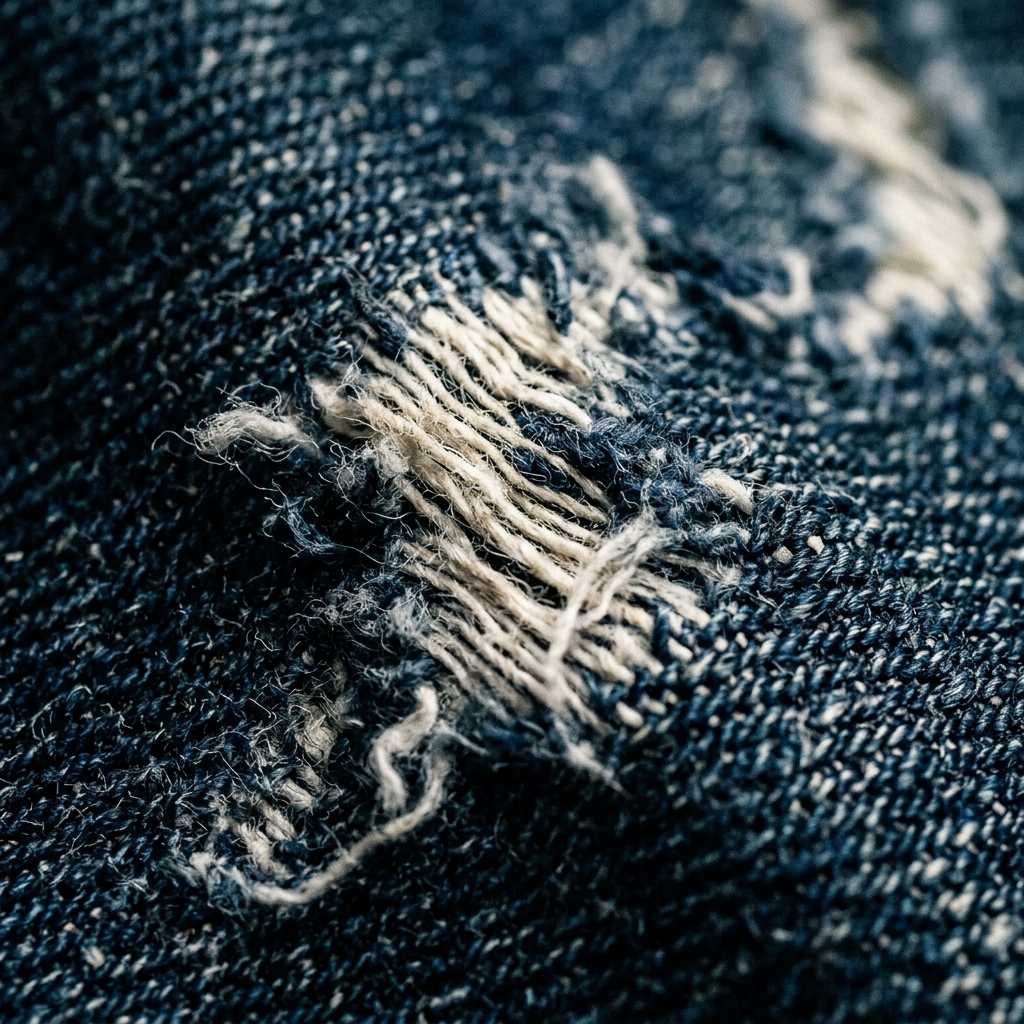
To understand why raw denim wears the way it does, you have to look at the yarn itself. Cheap synthetic jeans are dyed all the way through the core of the thread, which is why they wash out to a flat, dull blue. Premium raw denim uses a process called ring-dyeing.
During ring-dyeing, the warp threads (the vertical, indigo-colored yarns) are dipped into indigo vats quickly and pulled out to oxidize. The dye clings to the outside of the cotton thread but does not penetrate the core.
That leaves the center of the yarn completely white.
As you wear the jeans, the outer layers of indigo dye are scraped off by physical contact and movement. The blue wears away, slowly exposing the clean white cotton core beneath.
This is friction-based mechanical abrasion.
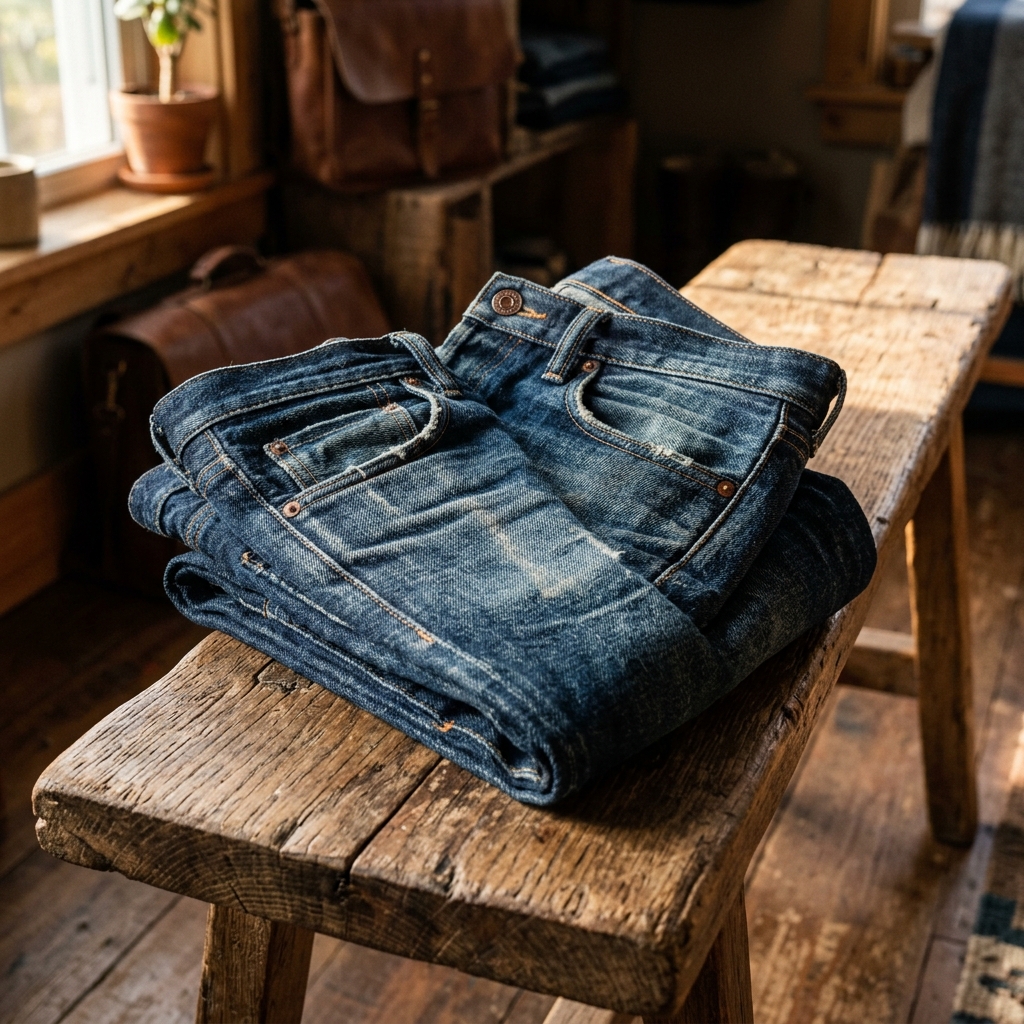
Because your body bends, stretches, and sits in specific ways, friction is never distributed evenly. Areas that experience constant bending or rubbing lose their outer indigo layer rapidly. The zones that remain flat and untouched stay dark blue. This contrast is what makes raw denim look beautiful and unique to your body.
The Core Culprits Behind Unnatural Fading
Natural wear creases are highly desirable, but streaky patches and weird color grids are not. If your jeans have faded in a way that looks messy rather than authentic, one of these three issues is usually to blame.
1. High-Speed Washing Machines (The Spin Cycle Trap)
This is the most common cause of ruined raw denim. Stiff, unwashed cotton fabric is highly prone to hard creases. When you throw a stiff pair of raw jeans into a washing machine and run a standard spin cycle, the drum spins at high speeds.
The centripetal force squishes the folded jeans flat against the metal drum walls.
This creates sharp, artificial creases in the wet fabric. The high-speed friction rubs the indigo off the edges of these artificial folds, creating long, vertical white lines that look like bleach streaks. Once these lines are set, they cannot be undone.
2. Sitting Habits and Desk Alignment
Your daily routine leaves a permanent physical imprint on your clothes. If you work at a desk and constantly cross your left leg over your right knee, the outer left thigh will experience intense, localized rubbing.
You will end up with a bright faded patch on one leg while the other remains dark.
Similarly, if your office chair has a rough textured mesh seat, the entire seat and back pocket area of your jeans will wash out much faster than the thighs.
3. Pocket Storage Profiles
Carrying bulky items in your front or back pockets creates a constant projection. A heavy smartphone, a thick leather wallet, or a ring of keys pushes the denim fabric outward.
This creates a high-tension point that constantly rubs against car seats, chairs, and tables.
You get a clean white outline of your phone or wallet. For raw denim purists, this “pocket fade” is a badge of honor. For those who prefer a cleaner, more balanced look, it can feel like a defect.
The Material Science of Friction: Heavy vs. Light Denim
The weight of your denim determines how sharply it will fold, crease, and fade. Denim weight is measured in ounces per square yard (oz), and it affects the mechanical physics of the crease.
Lightweight Denim (9oz – 11oz)
Lightweight fabric is soft and pliable. It drapes rather than folds. When you sit down, the fabric crumples into soft, rounded waves instead of sharp, crisp creases. Because the folds are soft, friction is distributed over a wider surface area.
The result is a soft, vintage-style fade with low contrast and gentle color transitions.
Heavyweight Denim (15oz – 21oz+)
Heavyweight raw denim behaves like canvas. It takes real physical effort to bend. When you sit or walk, the fabric is forced into sharp, angular creases that lock into place. The edge of each crease acts like a tiny mountain ridge, catching every bit of external friction.
Because the friction is concentrated entirely on the thin edge of the fold, the indigo rubs off rapidly, exposing the white yarn core in clean, razor-sharp lines.
If you want high-contrast, dramatic whiskers and honeycombs, heavy denim is essential.
How to Set and Preserve Premium Fades: A Step-by-Step Care Guide
Achieving beautiful fades is a long game. It requires patience during the wear phase and extreme caution during the washing phase.
If you want to secure the best results, implement this wear-and-wash strategy.
Step 1: The Six-Month Dry Wear Phase
To get sharp, high-contrast creases, the fabric needs to settle to your body shape. The starch in unwashed raw denim holds the folds in place. If you wash the jeans too early, the starch dissolves, the fabric softens, and the creases shift.
Try to wear your jeans daily for three to six months before their first soak or wash.
This sets the crease pattern permanently.
Step 2: The Inside-Out Cold Hand Wash (Recommended)
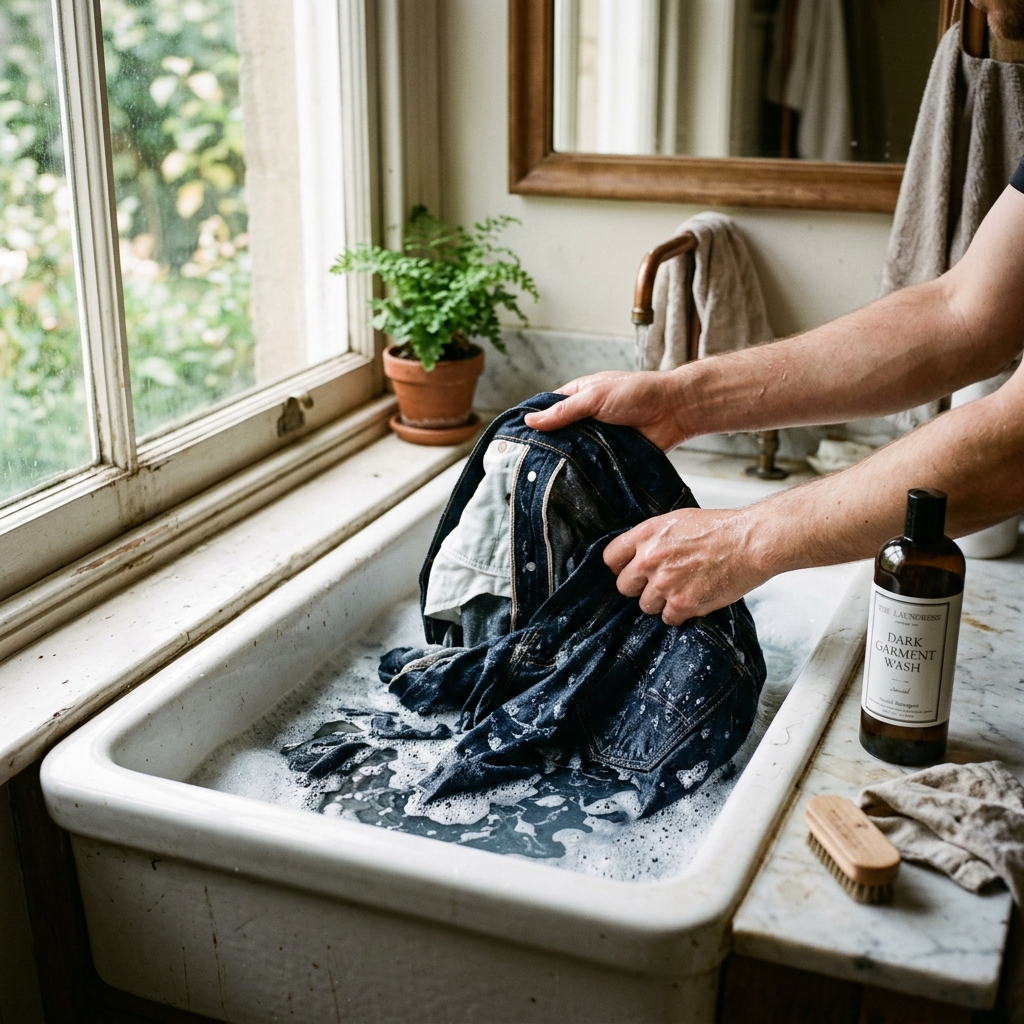
When it is finally time to wash them, hand-washing in a tub is the safest method to prevent streaks and bleeding.
1. Fill a tub or basin with cold or lukewarm water.
2. Add a small cap of dark-garment liquid detergent (standard detergents contain optical brighteners that fade indigo).
3. Turn the jeans inside-out (this protects the outer indigo face from direct abrasion).
4. Submerge the jeans flat and let them soak for 30 to 45 minutes. Gently agitate the water occasionally.
5. Rinse thoroughly with clean cold water, then press the water out by rolling the jeans in a dry towel. Never wring or twist the fabric.
6. Hang them flat to air-dry out of direct sunlight.
Step 3: Machine Wash Fallback (If Hand-Washing is Not an Option)
If you must use a machine, you have to bypass the high-speed drum physics.
1. Turn the jeans inside-out and zip/button them fully.
2. Choose a delicate or wool cycle with cold water.
3. Crucial: Set the spin speed to “No Spin” or the lowest possible RPM.
4. Remove the jeans immediately when the cycle ends. Shake them out, smooth the fabric flat with your hands, and hang them to dry.
Authentic Community Perspective: The Choice of Wash Frequency
There is a constant debate in the raw denim community about how long to delay the first wash. The truth is that extreme wash avoidance has its own tradeoffs.
Here is how a veteran collector breaks it down on r/rawdenim:
“The ‘never wash your jeans’ rule has been blown out of proportion. If you wait a year to wash your heavily worn jeans, the dirt and sweat build up inside the cotton fibers. The grit acts like sandpaper from the inside out, causing the crotch and pocket edges to blow out much faster. Wash them when they smell or feel grimy. A clean pair of jeans lasts longer, and clean fades look better than dirty ones.” — Reddit user, r/rawdenim
This perspective is crucial.
Delaying the first wash helps lock in the crease geometry, but keeping your jeans dirty for too long will rot the threads and cause premature blowouts. Balance is key. If your jeans are dirty, wash them. Just do it gently.
Final Verdict
Uneven fading is a natural, beautiful expression of how you wear your clothes, but washing streaks are a defect of speed. The difference between a premium fade and a ruined pair of jeans comes down to controlling the physical friction they experience.
Choose lightweight denim for a soft, uniform, vintage look.
Choose heavyweight raw denim for sharp, high-contrast, dramatic creases.
Keep them dry for the first few months to let the creases learn your body’s shape.
When the time comes to wash, treat the fabric like a delicate canvas. Keep them inside-out, wash them in cold water, and banish high-speed spin cycles. If you follow this simple blueprint, your raw denim will age gracefully, becoming a highly personalized, durable staple in your wardrobe.
FAQ
Why did my jeans get white vertical lines after washing?
The lines are caused by the high-speed spin cycle of your washing machine. The stiff fabric was squished into sharp folds against the metal drum, and the spin friction scraped the indigo off the edges of those folds. Always wash raw denim inside-out and set your machine to “No Spin.”
Does freezing your jeans clean them?
No. Freezing jeans does not kill bacteria; it merely makes them dormant. When the jeans warm up, the bacteria wake up, and the smell returns. If your jeans are dirty or smelly, they need a gentle wash, not a trip to the freezer.
What is the best detergent for raw denim?
Use a mild, liquid detergent formulated for dark clothes. Avoid standard powder detergents, as they often contain optical brighteners and bleaching agents that strip indigo dye and flatten the color contrast.
Will raw denim shrink after the first wash?
If they are unsanforized (shrink-to-fit) denim, they will shrink up to 10% in size during the first wash. If they are sanforized (pre-shrunk) denim, they will only shrink slightly and stretch back out to their original size within a few wears.
This explanation makes so much sense! I just bought my first pair of raw denim jeans and I’m terrified of washing them for the first time. You mentioned using a vinegar soak to lock in the indigo—does this actually work, and does it leave a vinegar smell in the fabric afterwards? I really don’t want to walk around smelling like salad dressing.
Hey Tyler! Welcome to the raw denim rabbit hole! Don’t worry, the vinegar smell completely vanishes once the jeans are dry. The acid in white vinegar helps neutralize any alkaline residues and stabilizes the natural indigo dye bonds. Just do a 30-minute soak in cold water with half a cup of white vinegar, then rinse in cold water and hang dry. They will smell 100% fresh, and it really does help lock in those high-contrast creases you’ve been working on. Good luck! — James